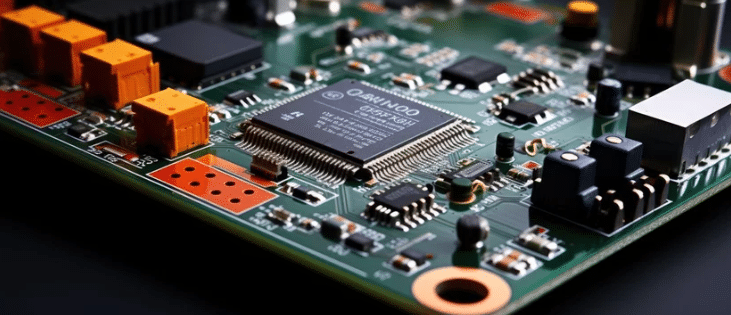
From medical robots to industrial gateways, to satellites orbiting the Earth, embedded operation systems are the brains that bring computer hardware to life. They quietly power the machines and devices we depend on every day. But what exactly is an embedded operating system, and how does it differ from the software that runs on your laptop ? Discover everything you need to know to choose, design, and implement the right operating system for your next project.
What is an embedded operating system?
To understand the embedded os meaning, you must consider its specialization. An embedded operating system is a specialized sofware platform designed to perform specific tasks within a larger embedded system.
Core characteristics of an embedded OS
An embedded operating system means efficiency. Every byte of memory and every clock cycle of the processing power counts.
- Efficiency and constraints: These systems operate under strict hardware limitations. The system designed for an embedded development environment must be lightweight and stable.
- Optimized processing power: In embedded computing systems, the OS ensures that the CPU focuses entirely on the device’s core mission, avoiding unnecessary background processes.
- Dedicated functionality: These are systems including hardware and software working tightly together to execute a fixed set of functions, such as managing a smart thermostat or a vehicle’s braking system.
Popular embedded operating systems
There is a vast embedded OS list available today. Some notable embedded operating system examples include:
- Embedded Linux: The gold standard for versatility and open-source support.
- FreeRTOS / Zephyr: Lightweight leaders for microcontrollers.
- VxWorks: Highly used in aerospace and defense.
Kernel vs. distribution
For advanced systems (especially in the Linux ecosystem), it is essential to distinguish between these two layers:
- Kernel: This is the low-level core of the OS. Its job is to manage the hardware, memory, and task scheduling. It is the “engine” of the system.
- Distribution: This is the complete package built around the kernel. It includes the libraries, tools, and applications needed for development. Common examples include Yocto, Buildroot, or Ubuntu Core.
How does an embedded system work?
An embedded system functions through a deep synergy between code and silicon. Embedded software developers create the embedded architecture that allows the software to interact with microcontrollers or microprocessors.
The embedded operating system manages specific applications by scheduling tasks and allocating hardware resources (such as sensors or actuators).
What about desktop operating systems?
A desktop os is built for versatility and user multitasking, whereas an embedded architecture is stripped down to its essentials to guarantee reliability and performance.
What are embedded operating systems used for?
Practically, what are embedded os used for in the real world? Their applications span from deep-sea sensors to the palm of your hand.
Industrial and critical infrastructure
In sectors where failure is not an option, the OS must perform with 100% reliability.
- A medical device, such as an infusion pump or a ventilator, requires a predictive behavior of embedded operating system to ensure patient safety.
- In factories, control systems manage assembly lines using robust solutions like embedded Linux.
- These systems are secure and hardened against cyber threats, as they often manage critical infrastructure as power grids.
Consumer electronics and IoT
The expansion of IoT services has placed embedded devices everywhere.
- Connectivity is central to modern gadgets, which rely on a robust network stack to exchange data with the cloud.
- Even small devices now require a sophisticated user interface to meet consummate expectations for smart behavior and ensure a quality user experience.
- Whether it’s a wearable tracker or a smart refrigerator, task management must be simplified and efficient. The operating system must effectively control power consumption while simultaneously managing multiple sensors.
What are the differences between RTOS and embedded OS?
While all RTOS are embedded OSs, not all embedded OSs are real-time. So, what are the differences between these two systems?
When to use a real-time operating system (RTOS)
A real-time operating system (RTOS) is defined by determinism. This means the system guarantees that a task will be completed within a precise timeframe.
In the embedded OS vs. RTOS debate, choose an RTOS for safety-critical applications (such as flight controls) where a delay of a few milliseconds could be catastrophic.
When to use a general purpose embedded OS
A general purpose embedded OS, such as embedded Linux without preempt RT or Android, is used when the processing power of the computer allows for more complexity.
Embedded OS offers richer features, such as complex file systems, advanced user interface frameworks, and extensive driver support, which are often more important than microsecond-level timing.
Understanding bare metal
Bare metal refers to a software execution model where an application runs directly on the hardware, bypassing any intermediate operating system (OS) or Real-Time Operating System (RTOS) layer.
- Total Control: The application is solely responsible for hardware initialization, peripheral management, and interrupt handling.
- Peak Performance: By eliminating OS overhead, the system leverages 100% of the hardware’s processing power.
- High Determinism: Without a task scheduler, execution timing becomes predictable and consistent.
- High-speed applications where every cycle counts Bare metal is suited for simple and resource-constrained embedded systems.
How to choose an embedded operating system?
Selecting the best embedded OS is a strategic decision that affects product’s time-to-market and lifecycle. Your OS choice is dictated by your hardware’s reality.
There is a world of difference between a regulated, tiny, battery-powered medical device that may live in a world of strict regulations and extreme energy constraints, and a wall-plugged industrial hub, designed for rich user interfaces and complex cloud stacks. Each requires a different architectural philosophy. We balance the device’s form factor against its mission, analyzing the duty cycle to determine if you need microsecond precision or multi-functional versatility.
There are no universal rules here, only the challenge of aligning your software with the long-term lifecycle of the product. The right OS is the one that turns these specific constraints into a reliable, maintainable system.
In the table below, we show you how these variables lead to radically different architectures depending on the use case.
| Use case | Device characteristics | Key constraints | Recommended OS |
|---|---|---|---|
| Use case #1: Simple device | Single sensor (e.g. weather sensor) No or very limited libraries Limited connectivity No display One or two tasks | Very limited resources Strong determinism requirements Low software complexity | Bare metal or minimal RTOS (e.g. FreeRTOS – kernel only) |
| Use case #2: Connected device with UI | Network connectivity (Wi-Fi, Ethernet, Bluetooth…) User interface Multiple features Example: connected coffee machine | Rich networking stack Software maintainability Scalability | Embedded Linux (for advanced UI, high networking bandwidth, video streaming) or Zephyr RTOS (when real-time constraints and limited resources apply) |
| Use case #3: Regulated / safety-critical environment | Regulatory compliance (medical, industrial, etc.) High safety requirements Separation of safety-critical and non-critical functions | Certification mandatory Reliability and traceability | Safety-certified RTOS (VxWorks, ThreadX) for safety-critical functions + OS selected from Use case #1 or #2 for connectivity and UI |
Open source vs. certified operating systems
In use cases #1 and #2, projects often rely on open-source solutions:
- Bare metal
- FreeRTOS
- Zephyr
- Embedded Linux
These options provide:
- High flexibility
- Large ecosystems
- Reduced licensing costs
- Strong industry adoption (Witekio point of view)
For safety-critical systems, regulatory constraints typically require:
- Certified operating systems
- Validated development and maintenance processes
This usually leads to commercial, licensed RTOS solutions, such as:
- VxWorks
- ThreadX
Hardware matters : MCU vs. MPU
Whether you are working with a microcontroller (MCU) or a microprocessor (MPU) largely dictates your OS choices:
- MCUs: Designed for low power and specific control tasks. They run lightweight RTOS or even bare metal software when resources are limited.
- MPUs: Offer higher processing power and memory management units (MMU). They are better suited for Linux-based distributions but also for commercial OSs that support advanced networking and user interfaces.
→ For more insights: check our blog!
At Witekio, we help you navigate the complexity of embedded operating systems. From kernel optimization to security audits, our embedded software developers ensure your project is built on the right foundation.
FAQ: common questions about embedded operating systems
What is an embedded operating system (OS)?
What is an embedded operating system designed for?
Can an embedded OS be modified?
What type of operating system do embedded devices use?
Which is the advantage of using embedded operating systems?
How to choose an embedded operating system?
You have to consider your hardware design.